
First-party data activation turns information a business collected through its own customer relationships into a media decision. That information can include CRM records, customer lists, product usage, transactions, lead status, loyalty activity, website events and offline outcomes.
The value is not the size of the database. It is whether the data changes who you reach, what you suppress, how you sequence the message or how accurately you measure the result. A large, stale CRM with vague consent and inconsistent identifiers may produce less usable reach than a smaller, current segment built for one clear purpose.
Quick answer: Use first-party data in programmatic advertising by defining a business use case, confirming consent and platform eligibility, preparing matchable identifiers, building useful CRM segments, activating or excluding those segments in a DSP, and testing incremental outcomes. Treat source records, matched users and reachable users as separate numbers, because an uploaded list is not the same as an addressable audience.
How do you use first-party data in programmatic advertising?
Start with the decision, not the upload. Define the audience treatment, document why the data can be used, prepare identifiers in the format the platform accepts, activate the segment in the relevant buying platform, and connect media exposure to a business outcome. Then compare the treatment with a credible baseline.
Choose one business question. Examples include excluding existing customers from acquisition, re-engaging lapsed buyers or prioritising high-value accounts.
Audit the data. Confirm source, purpose, consent or other lawful basis, recency, quality, retention and suppression rules.
Build the segment. Use lifecycle, value, product interest, market or account status rather than one undifferentiated customer list.
Prepare identifiers. Normalise email addresses, phone numbers, postal fields, mobile device IDs or platform-specific identifiers before onboarding.
Activate or exclude. Apply the list only where the platform, market, inventory and creative setup support it.
Measure lift. Track matched and reachable scale, media performance, qualified outcomes and incrementality separately.
How do DV360, Amazon DSP and Adform compare for activation?
Platform | Practical first-party role | Useful inputs and routes | Important limits to verify
|
|---|---|---|---|
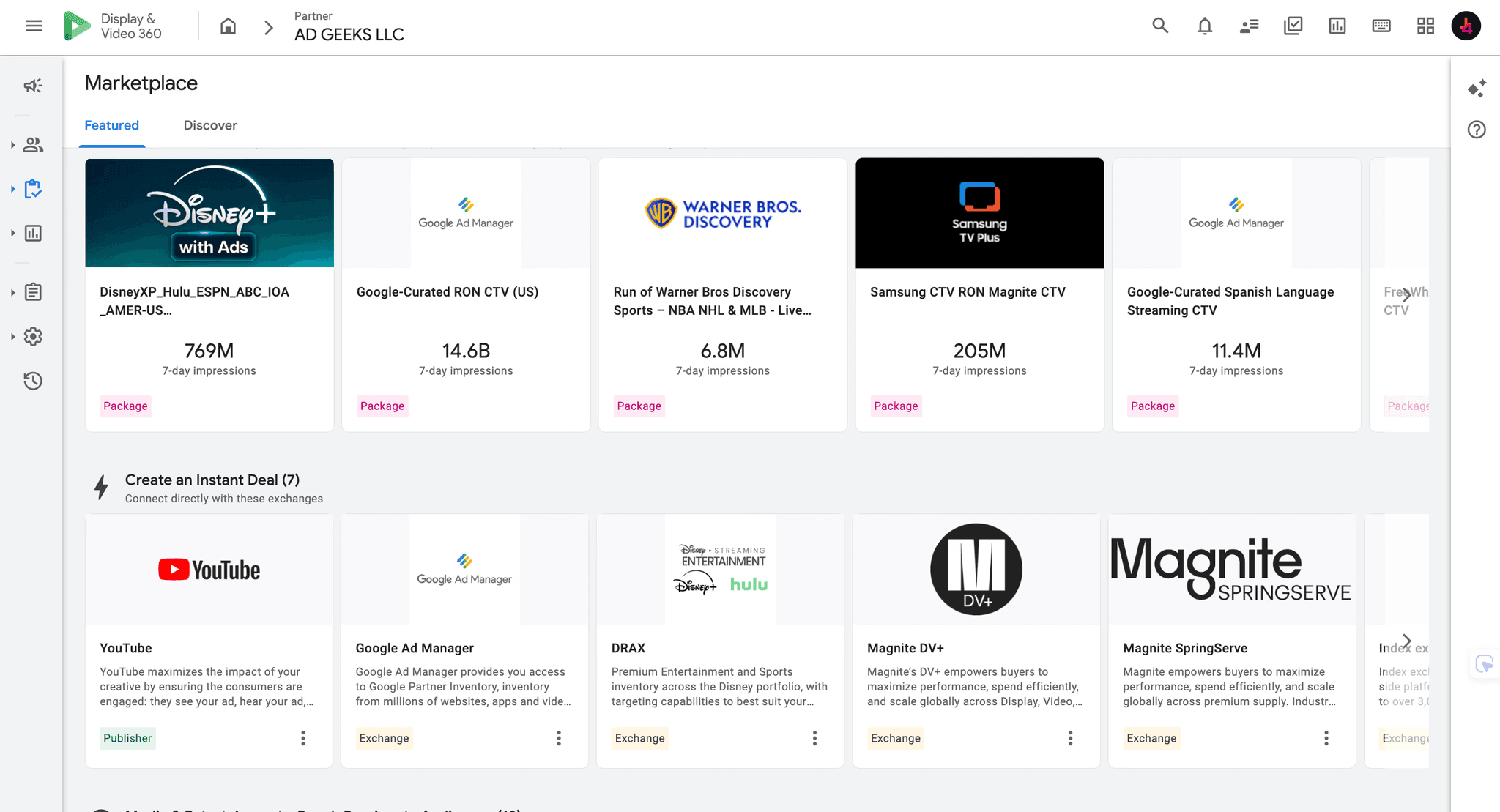
Google Display & Video 360 | Customer Match targeting and exclusions across eligible Google and open-web workflows, with linked Google Marketing Platform measurement. | Manual CSV, Data Manager connections such as BigQuery, Google Sheets, HubSpot and SFTP, approved upload partners, external DMPs and PAIR clean rooms. | Account eligibility, consent signals, minimum thresholds, inventory and creative compatibility, EEA restrictions, and membership duration. |
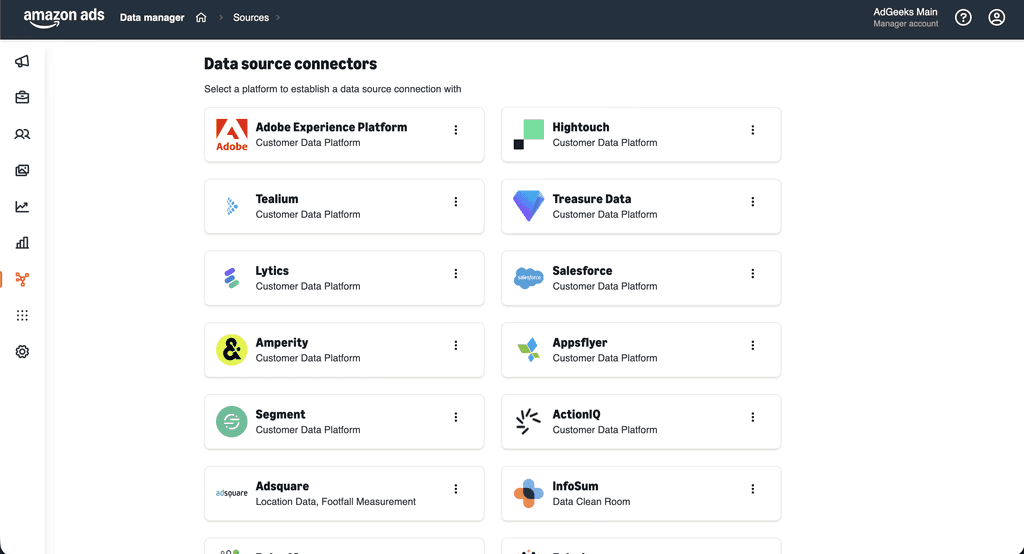
Amazon DSP and AMC | Audience activation and measurement using advertiser signals alongside Amazon Ads engagement and commerce signals. | Pseudonymised advertiser inputs in Amazon Marketing Cloud, audience templates, custom queries and eligible direct audience onboarding routes. | Advertiser and marketplace eligibility, accepted signals, activation destination, aggregation rules, minimum scale and the selected access model. |
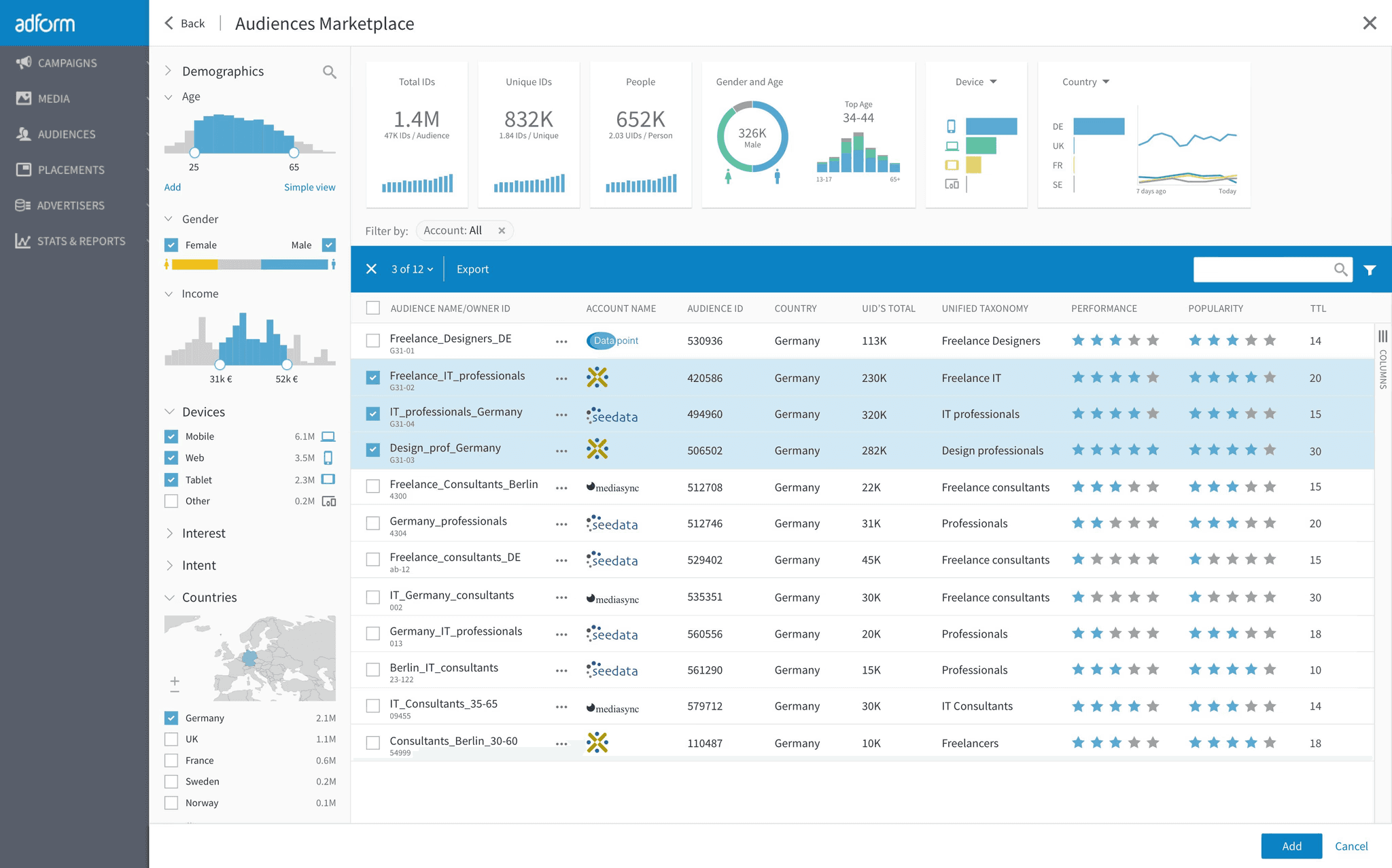
Adform | Open-web and omnichannel activation through an integrated DSP, data and identity environment. | First-party segments onboarded through the account's configured data route, plus identity options supported by Adform ID Fusion. | Available onboarding method, identifier coverage by market and publisher, account configuration, regional privacy rules and measurement setup. |
This is a capability map, not a guarantee that every account can use every feature. Platform names, eligibility and supported inventory change. Confirm the current setup with the account provider before turning a planning assumption into a campaign.
Which business use cases should you prioritise?
Acquisition suppression
Exclude existing customers, current subscribers, employees, recent converters or open opportunities from campaigns meant to find new buyers. Suppression is often the fastest first-party win because it reduces obvious waste and protects the customer experience. It also creates a cleaner new-customer denominator for reporting.
Lifecycle and retention
Separate active, lapsed and at-risk customers. Give each group a different recency window, message and conversion definition. A lapsed buyer may need a return offer, while an active buyer may need product education or cross-sell messaging. The segment should refresh as customer status changes.
Value-based activation
Use repeat purchase, margin, predicted lifetime value or product mix to create tiers. Higher-value segments can receive different inventory, bids or creative, but only when the value definition is stable and the test can separate audience quality from higher media pressure.
B2B account-based marketing
CRM opportunity stage, named-account tier and sales ownership can inform account audiences, exclusions and message sequencing. The media plan should stay aligned with the sales process. For a fuller operating model, see the B2B ABM programmatic guide.
Measurement and conversion quality
Join platform outcomes to CRM stages such as qualified lead, opportunity, first purchase or renewal. This can expose the gap between cheap conversions and valuable customers. The data does not need to become a targetable audience to improve measurement.
How should you audit data, consent and governance?
Data collected directly is not automatically safe to use for advertising. First-party describes the relationship to the source, not the legal permission or platform eligibility. Before activation, document the processing purpose, the lawful basis, the information given to people, any consent signals required by the platform, and how users can withdraw or object.
The UK Information Commissioner's Office says organisations must choose and document a lawful basis before processing begins. Its April 2026 guidance also stresses that processing should be necessary and proportionate to a specific purpose. If the purpose changes, the original basis may not remain appropriate.
For Google Customer Match, Google states that advertisers must comply with its Customer Match policies and, where relevant, the EU user consent policy. For users in the EEA, granted consent signals are required for personalised Customer Match use. If consent is not granted, the user should not be added to the list or served a targeted ad from that list.
Run a practical audit before any file leaves the source system:
Purpose: What campaign decision will this field or segment support?
Permission: What lawful basis and platform policy support the intended use?
Transparency: Did the privacy notice explain advertising, sharing and measurement clearly enough?
Minimisation: Can the same decision be made with fewer fields or a less intrusive method?
Risk: Does the segment imply health, finance, children, political views or another sensitive characteristic?
Control: How are opt-outs, objections, deletion requests and do-not-contact records enforced?
Security: Who can export, hash, upload, refresh and delete the audience?
Retention: When does the source record, match file or audience membership expire?
Privacy teams should review the real data flow, not a generic statement that the records are hashed. Hashing is a security control, not anonymous processing. The source data, transformation, upload, match, activation and deletion steps still need owners and access controls.
Which identifiers drive match rates and reachable scale?
Matching usually starts with identifiers such as email address, phone number, name and postal data, mobile device ID or a platform-specific pseudonymous ID. Quality matters more than raw row count. Normalisation, recency, geography and user sign-in behaviour can all affect the result.
Google's DV360 Customer Match guidance accepts contact information and mobile device IDs under specific formatting rules. It supports SHA-256 hashing for contact information, and Google can hash eligible plain-text contact data during upload. The current guidance also lists a minimum of 100 30-day active users and a 540-day maximum membership duration. Those thresholds do not guarantee delivery.
Keep four numbers separate:
Source records: rows selected in the CRM or warehouse.
Valid identifiers: records that pass formatting, permission and deduplication rules.
Matched users: identifiers the platform can associate with eligible users.
Reachable users: matched users available in the chosen market, inventory, device and campaign setup.
Do not publish one universal “good match rate”. A 60% rate can be excellent for one source and weak for another. Compare like with like: the same platform, market, identifier mix, refresh cadence and customer cohort. Diagnose the biggest loss between stages before adding more data.
Once the audience is viable, apply a deliberate segmentation structure. The DV360 audience segmentation guide explains how lifecycle, intent and value groups can support different campaign treatments.
What should teams know about each platform?
DV360
DV360 Customer Match supports manual customer-list upload and connected data sources through Data Manager. Google's current help documentation names options including BigQuery, Google Sheets, HubSpot and SFTP. Lists can be used for positive targeting or exclusions in eligible line items.
Important limitations are easy to miss. Contact-based Customer Match does not serve through every exchange or with every creative setup. Google's current guidance says contact-based lists are supported on Google Ad Manager and YouTube inventory, while third-party exchange activation has restrictions. It also notes that Google Partner Inventory and third-party exchange web and app activation is unavailable in the EEA. Creative and third-party tracking compatibility must be checked before launch.
If access, linking or governance is unresolved, start with the DV360 access options and provider checklist. For implementation support, see the Ad Geeks DV360 solution page.
Amazon DSP and Amazon Marketing Cloud
Amazon Marketing Cloud is Amazon Ads' secure, privacy-safe clean room. Amazon says AMC accepts pseudonymised advertiser inputs, combines them with eligible Amazon Ads signals, and returns aggregated, anonymous outputs. Advertiser inputs cannot be exported or accessed by Amazon according to the product page.
AMC can support analysis, audience building and direct activation across eligible sponsored ads, video and display media. It is most useful when the question benefits from Amazon Ads exposure or commerce signals, or when a brand needs a privacy-safe way to combine advertiser outcomes with campaign events.
Clean-room availability does not remove the need to define the query, permitted inputs, minimum output thresholds and activation destination. The access route also affects the operating model. Review the Amazon DSP pricing and managed service guide before assuming platform, service and clean-room costs are interchangeable.
Adform
Adform positions FLOW as one place to plan, activate and measure display, video, CTV, mobile, audio, digital out-of-home and retail media. Its identity product, ID Fusion, is designed for a multi-ID environment and explicitly highlights the growing role of first-party data.
The practical activation route depends on the account and market. Confirm how CRM or CDP segments are onboarded, which identifiers are recognised, how consent is passed, how audiences refresh and where reporting can distinguish source, matched and reachable scale. Avoid promising that the same first-party segment will produce identical reach across DV360, Amazon DSP and Adform.
When should you use exclusions and suppression?
Exclusions deserve their own design. They can prevent acquisition ads from reaching current customers, stop converted users from seeing the same offer, protect people who withdrew consent, separate test and control groups, or keep one lifecycle segment out of another campaign.
The exclusion list should refresh at least as quickly as the business status it represents. A daily sales conversion feed may need daily suppression. A stable employee list may need a slower cadence. Measure exclusion coverage, not just upload success, because unmatched records can still receive ads.
Watch for hierarchy conflicts. An audience excluded at campaign level may block a valid retention or cross-sell line item. Keep a map of inclusions, exclusions, precedence and ownership so platform structure reflects the intended customer journey.
Where do clean rooms fit in the plan?
A clean room is useful when two or more parties need to analyse or activate overlapping signals without exposing row-level data to each other. Common use cases include reach and frequency analysis, path-to-conversion work, overlap studies, incrementality design and privacy-safe audience creation.
Use one when the question requires signal collaboration or event-level analysis that standard platform reporting cannot answer. Do not use one merely because it sounds more advanced. A clean room still needs accurate inputs, a defined identity strategy, minimum output thresholds, approved queries and a decision that follows from the result.
Write the question before writing SQL. For example: “Among exposed users, which sequence of video and display touchpoints is associated with a first purchase, and how does that compare with an unexposed or holdout group?” That is more actionable than “combine all customer and media data.”
How should you measure and test first-party activation?
Platform conversion reports are one layer, not the final answer. Build a measurement plan that connects delivery to customer quality and tests whether the first-party treatment created incremental value.
Layer | Track | Question answered |
|---|---|---|
Data readiness | Valid records, duplicates, consent coverage, age of data | Was the source fit for the use case? |
Activation | Matched users, reachable users, refresh success, exclusion coverage | Did the platform create a usable audience? |
Media | Reach, frequency, CPM, viewability, completion and spend | Did the audience receive the intended treatment? |
Business outcome | Qualified leads, purchases, margin, retention or pipeline | Did the campaign produce valuable outcomes? |
Incrementality | Holdout difference, lift, confidence and contamination | What changed because of the activation? |
Use randomised holdouts where the platform and scale permit. When they do not, use matched geographies, phased rollouts or another defensible comparison and document the limitation. Keep audience definition, offer, budget and creative pressure as stable as possible so the test isolates the value of the first-party treatment.
Agree on attribution windows and CRM status timing before launch. If the DSP reports 200 conversions and the CRM shows 73 qualified outcomes, compare event definitions, deduplication, identity joins and time windows before deciding that either system is wrong.
What does a first-party data activation checklist look like?
Write the business question and intended campaign action.
Name the data owner, media owner, privacy reviewer and approver.
Map each source, field, purpose, lawful basis, consent signal and retention rule.
Remove ineligible, sensitive, stale, duplicate and suppressed records.
Normalise and validate identifiers before hashing or upload.
Record source, valid, matched and reachable counts separately.
Confirm platform, market, inventory, creative and tracking compatibility.
Define inclusion, exclusion, refresh and expiry logic.
Create a holdout or baseline and connect outcomes back to the CRM.
QA delivery, frequency, consent changes and audience refresh after launch.
Document learnings and decide whether to scale, revise or stop.
Frequently asked questions
What is first-party data activation?
It is the use of advertiser-owned customer or prospect information to improve targeting, exclusions, sequencing, optimisation or measurement. The data must still meet privacy law, platform policy and technical eligibility requirements.
Can CRM data be used in programmatic advertising?
Often yes. The CRM segment needs an approved purpose, valid permission, matchable identifiers and enough eligible users for the chosen platform, market and inventory.
What is a good first-party data match rate?
There is no universal benchmark. Compare rates within the same platform, market, identifier mix and cohort, then diagnose losses between source records, valid identifiers, matched users and reachable users.
Does hashing make customer data anonymous?
No. Hashing protects identifiers during matching, but it does not automatically make the workflow anonymous. Purpose, consent, access, retention and deletion obligations still apply.
Do you need a CDP to activate first-party data?
Not always. A controlled CRM or warehouse workflow can support a focused use case. A CDP becomes more useful when many sources, destinations, identities and real-time lifecycle changes require orchestration.
How often should first-party audiences refresh?
Match the refresh to the business status. Conversion exclusions and fast-moving lifecycle segments may need daily updates, while stable account tiers may refresh weekly or monthly.
When should you use a data clean room?
Use one when analysis or activation requires combining signals without exposing row-level data, and when the resulting query can change a media or business decision. It is not a substitute for clean source data or valid consent.
What is the next step?
Choose one segment and one measurable decision. Prove that the data is permitted, matchable, reachable and operationally maintainable before expanding the stack. The strongest first-party strategy is the one the media and CRM teams can refresh, explain and measure repeatedly.
Sources
Google Display & Video 360 Help, Customer Match audience, accessed October 9, 2026.
Google Display & Video 360 Help, How Google Marketing Platform uses Customer Match data, last updated July 2020, accessed October 9, 2026.
Google Display & Video 360 Help, Sharing audience lists from external DMPs, PAIR data clean rooms or Customer Match uploader partners, accessed October 9, 2026.
Amazon Ads, Amazon Marketing Cloud, accessed October 9, 2026.
Adform, Adform FLOW and Adform Identity, accessed October 9, 2026.
Information Commissioner's Office, A guide to lawful basis, updated April 2, 2026.
Information Commissioner's Office, Data protection by design and by default, accessed October 9, 2026.